
New publications
Future-proofing chemical profiling of tobacco and nicotine products: standardised non-targeted analysis (NTA) of e-liquid flavour profiles for monitoring and regulation purposes - PubMed
A Turina, PubMed, April (2026)

The tobacco industry increasingly targets youth with e-cigarettes, raising usage rates among adolescents worldwide. This study developed and validated a standardized, non-targeted analysis (NTA) method using GC-MS, tested by 21 international laboratories, for assessing e-liquid chemical composition. Applied to 23 commercial e-liquids, the method identified flavourings with sweet, fruity, and cooling flavours most common. Now a WHO Standard Operating Procedure, this robust method enables better regulatory monitoring and supports global enforcement of e-cigarette regulations.
The chemical profile and toxicological impact of heated tobacco products - PubMed
M Davigo, PubMed, February (2026)

This review of 74 independent studies (2019–2024) found that Heated Tobacco Products (HTPs) contain lower levels of many harmful chemicals compared to cigarettes, such as nicotine and nitrosamines. However, HTPs emit higher concentrations of certain carcinogens and unique toxicants like formaldehyde cyanohydrin. Biomarkers of exposure and toxicity are reduced in HTP users versus smokers, but remain higher than in non-users. HTP use leads to short-term cardiovascular and lung effects, and laboratory studies show cell damage and inflammation. The long-term health risks are unclear, but HTPs are not without significant concerns.
Device color influences e-cigarette flavor expectations, perception, and appeal - PubMed
Ina M Hellmich, NIH, March (2026)
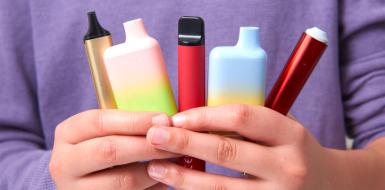
This study examined how e-cigarette device color affects flavor perception in 63 users. Using a mixed design, participants evaluated red, green, and reference-colored devices with tobacco-flavored or flavorless e-liquids across seeing, smelling, and vaping conditions. Red and green devices enhanced expectations and experiences of flavor liking, wanting, familiarity, sourness, fruitiness, and (for red) sweetness compared to reference colors. Color effects were observed regardless of flavor or administration route. The results suggest device color can influence both anticipated and actual flavor perception and appeal, supporting color regulation in e-cigarette policy.
Stable isotope labeling reveals that sugars are direct precursors to several toxicants and flavorings in cigarette smoke | Nicotine & Tobacco Research | Oxford Academic
Wouter F Visser, Oxford Academic, 18 March (2026) This study investigates the role of sugars in cigarette tobacco and their impact on smoke composition and harmfulness. Using isotope-labelled sugars, researchers

found that added sugars directly contribute to the formation of harmful and flavour-related compounds in cigarette smoke, such as furans and aldehydes. While sugars did not directly create polycyclic aromatic hydrocarbons (PAHs), their presence influenced the levels of PAHs, tobacco-specific nitrosamines (TSNAs), and nicotine by altering the burning process. The findings support banning the addition of sugars to cigarettes and setting limits on naturally occurring sugars in tobacco, as both contribute to harmful and appealing smoke components. Regulating sugars in tobacco products may help protect public health.
Reduced vaping and smoking prevalence among people using e-cigarettes after implementation of an e-cigarette flavour ban in the Netherlands | Tobacco Control
Ina M Hellmich, BMJ Journals. 01 April (2026) This study examines the impact of the Dutch ban on e-cigarettes with flavours other than tobacco, nine months after its implementation. An online survey among pre-
ban users shows that 40% reduced their vaping, with 22% quitting entirely. The use of non-tobacco flavours dropped significantly, and most who quit vaping did not switch to another product. While 6% indicated to start smoking due to the ban, overall smoking rates declined. The study concludes that the flavour ban effectively reduces e-cigarette use and may benefit public health. To enhance its impact, international cooperation is recommended to restrict cross-border purchases of banned flavours.
Health Hazards of E-Cigarettes and Heated Tobacco Products: a Comprehensive Analysis of Hazardous Substances and Regulatory Gaps Maya EL Bouz, MSc. 06 December (2025)
This study identified 1,740 substances present in the ingredients and emissions of electronic cigarettes and heated tobacco products. Of these, 134 substances were classified as highly hazardous, including carcinogens, mutagens, and reproductive toxicants that are prohibited as tobacco additives. For most other substances, sufficient toxicological data are lacking. The research highlights regulatory gaps and the need for stricter enforcement of existing bans. The findings provide policymakers and public health professionals with valuable tools for improved monitoring and risk management.
Sugars in Tobacco Products: Toxicity Research and Implications for Tobacco Product Regulation - PubMed Stepanov I. Chem Res Toxicol. 15 May (2025) This review highlights that sugars and artificial sweeteners, whether naturally present or added during manufacturing, significantly contribute to the toxicity of tobacco and nicotine products through harmful chemical transformations during use. The findings underscore the need for further research and regulatory action, including consideration of the impact of sugars and sweeteners on product palatability as well as on harmful and potentially harmful constituents (HPHCs) in tobacco product regulation.
Heated tobacco product emissions induce DNA damage in human bronchial epithelial cells via radical formation - Maastricht University Davigo M. et al, Free Radic Res. 1 June (2025) This study demonstrates that IQOS emissions contain significant levels of radicals and tobacco-specific nitrosamines (TSNAs), induce DNA damage, and upregulate DNA repair gene expression in human bronchial epithelial cells. These findings suggest that, despite lower levels of some toxicants compared to conventional cigarettes, IQOS may still pose genotoxic risks, highlighting the need for further investigation into its potential long-term health effects.

Cigarette filter ventilation, product appeal and regulatory options: a review of the influence of ventilation on consumers’ sensory and risk perceptions Rees V.W. et al, Tobacco Control Published Online First: 03 February (2025) Cigarette filter ventilation may enhance product appeal, support initiation and sustained smoking, and increase smoking prevalence. A scoping review showed that cigarettes with filter ventilation are perceived as smoother and less irritating than non-ventilated cigarettes. These modified sensory experiences shape perceptions of reduced health risks. Pack text descriptors and colours convey further information to consumers about smoothness, supporting lowered risk perceptions. Since filter ventilation has no benefits for public health, policy makers could consider banning filter ventilation or even disallowing filters.
Patterns of use of heated tobacco products: a comprehensive systematic review Scala, M. et al, Journal of Epidemiology. Advance online publication, January 11 (2025) A systematic review and meta-analysis was conducted on the usage patterns of heated tobacco products (HTPs) and their impact on conventional tobacco smoking. The study analyzed 76 eligible articles, including cross-sectional and prospective cohort studies. Findings indicate that HTP use is more prevalent among young adults and less common among middle-aged and older adults. Former and current smokers are more likely to use HTPs, with 68.3% of HTP users being dual users of both HTPs and conventional cigarettes. The analysis also reveals that HTP users are more likely to start smoking conventional cigarettes, and current smokers using HTPs are less likely to quit smoking. The study concludes that HTPs are popular among younger generations but are not effective tools for smoking cessation.
The Effects of Filter Ventilation and Expanded Tobacco on the Tar, Nicotine and Carbon Monoxide Yields from Cigarettes Sold in AustraliaWinall, W.R. et al, International Journal of Environmental Research and Public Health, 22, 50 (2025). RIVM assessed Australian cigarettes to determine differences between variants and effects of the characteristics on TNCO emissions. When measured using the HCI protocol, which better emulates human smoking behavior than the industry-favored ISO protocol, TNCO emissions were markedly higher. Also, the emission differences by extent of filter ventilation were minimized, indicating that ISO measurements are misleading. Using the HCI protocol, our measurements show that higher levels of filter ventilation are not associated with reduced TNCO emissions measured. These findings confirm that cigarette color names, and the filter ventilation levels they signify, remain misleading more than a decade after plain packaging eliminated pack colors in Australia.
More RIVM publications on tobacco and related products
News
Sweet flavour and colour make e-cigarette appealing, also for non-smokers
Ban on cigarette filters can reduce the amount of microplastics in the environment

Heated tobacco products also harmful to health

Reinskje Talhout appointed special professor of Product appeal and prevention of harmful consumption behaviour

Excise duty increase prompted 7% of smokers to quit in 2024, significant growth in purchases made abroad

New nicotine sticks contain harmful amounts of nicotine

Two in five reduced the use of e-cigarettes after the introduction of the flavour ban

Excise duty increase affects smokers: more people attempt to quit, but more people also purchase tobacco abroad
More unhealthy behaviour among young people; their health remains vulnerable

RIVM recommends a standardised design for e-cigarettes to reduce e-cigarette appeal
